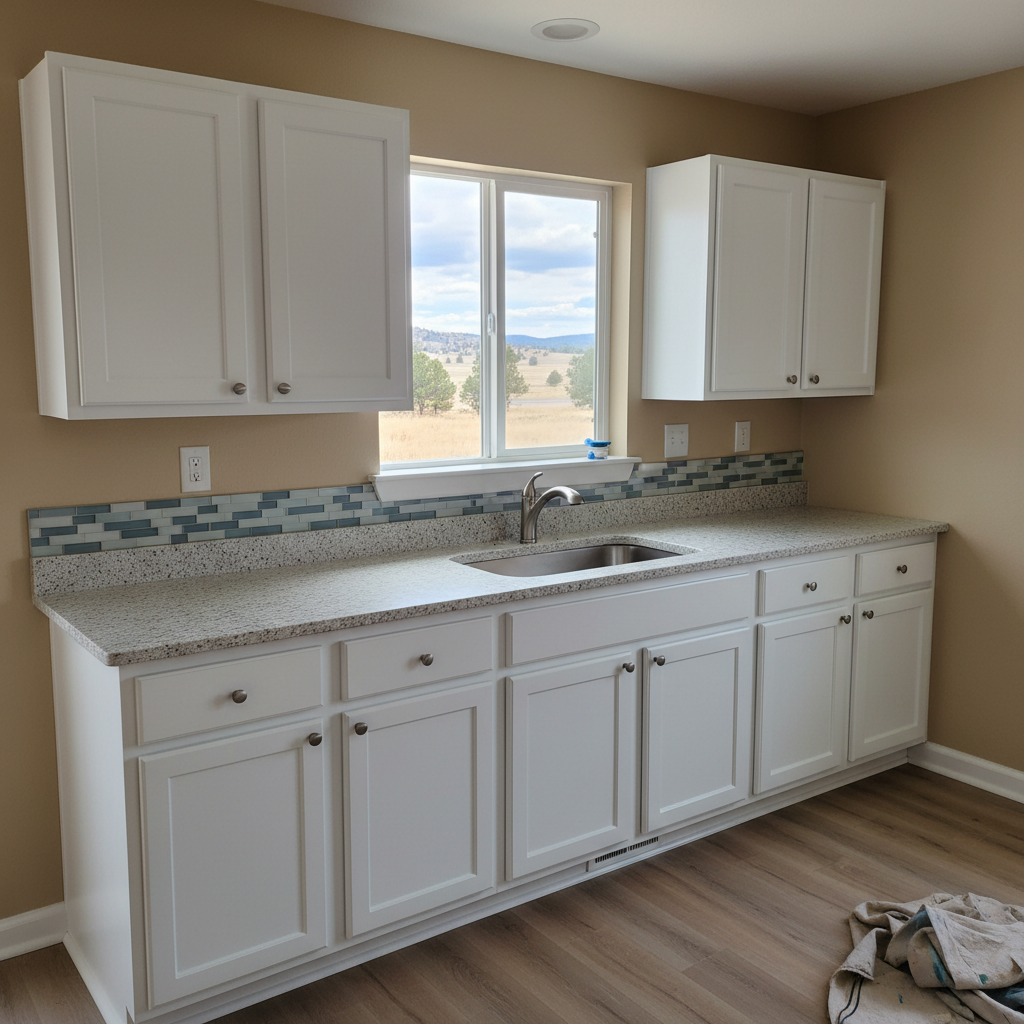
Alright, let's talk about cabinet painting. It's one of the best ways to completely transform your kitchen or bathroom without tearing everything out, and it's a service we do a lot of here at Rapid City Painting Company. But naturally, the first thing folks ask is, "What's it gonna cost me?"
You'll hear a lot of "it depends" answers out there, and while that's true to a point, I'm going to give you some real numbers and tell you what actually drives those prices. There are a few key things that really push the cost up or bring it down.
What Makes Cabinet Painting Prices Go Up or Down?
It's not just a flat rate per cabinet, that's for sure. Here's what we look at when we're putting together a quote:
- Number of Doors and Drawers: This is the biggest factor. More doors and drawers mean more surface area to clean, sand, prime, and paint. A small galley kitchen with 10-12 doors and a few drawers is going to be a lot less than a sprawling kitchen with 30+ doors, multiple banks of drawers, and an island.
- Condition of Your Cabinets: Are they brand new, never painted? Or are they 30-year-old oak cabinets with a thick, yellowed varnish, grease buildup, and a few dings? The prep work on older, dirtier, or damaged cabinets is extensive. We're talking heavy degreasing, sanding, filling imperfections, and sometimes even stripping old finishes. That takes time, and time is money.
- Type of Finish You Want: Most people want a smooth, durable, factory-like finish. That means using high-quality, specialized cabinet coatings, often sprayed for the best results. If you're looking for a hand-brushed, distressed, or glazed look, that's a different process and can add to the cost due to the artistic labor involved.
- Color Change: Going from a dark espresso to a bright white is a bigger job than going from a light beige to an off-white. Lighter colors over dark often require more coats of primer and paint to ensure full, even coverage without any bleed-through.
- Hardware Removal/Reinstallation: We always remove all hardware – hinges, pulls, knobs – before painting. If you're supplying new hardware, we'll reinstall it. This is usually part of the standard process, but if your hardware is particularly tricky or you have a ton of it, it can add a little time.
So, What's the Typical Range in Rapid City?
Alright, let's get down to brass tacks. For a typical kitchen cabinet painting project in Rapid City, you're generally looking at:
- Small Kitchen (10-15 doors/drawers): Expect to pay anywhere from $2,500 to $4,000. This might be a smaller condo kitchen or a single wall of cabinets.
- Medium Kitchen (16-25 doors/drawers): Most average-sized kitchens fall into this range. You're probably looking at $4,000 to $7,000.
- Large Kitchen (26+ doors/drawers, maybe an island): For bigger kitchens, especially those with lots of custom features or an island, the cost can range from $7,000 to $10,000 or even more for very extensive projects.
These numbers are for a professional, high-quality job that includes all the necessary prep, priming, and multiple coats of a durable, cabinet-specific paint. This isn't a weekend DIY with a roller and some cheap latex paint from the hardware store, which, trust me, you'll regret in a year.
What Should Be Included in Your Quote?
A good, detailed quote from a reputable company like ours should break down everything. You shouldn't be guessing. Here's what you should expect to see:
- Detailed Prep Work: This includes thorough cleaning, degreasing, sanding (often multiple times with different grits), filling minor imperfections, and masking off all surrounding areas to protect your home. We're talking about protecting your floors, countertops, appliances, and walls.
- Primer Coats: At least one, often two coats of a high-quality bonding primer are essential, especially if you're changing colors or dealing with an old, glossy finish. This is critical for adhesion and durability, especially with our dry Rapid City climate, which can make paint cure differently.
- Finish Coats: Typically two to three coats of a premium, cabinet-grade paint. We often use lacquers or specialized urethane acrylics that cure to a hard, factory-like finish.
- Door and Drawer Front Removal/Reinstallation: This is a given. We take them off-site to our shop for spraying to get the best finish, and then bring them back and put them all back together.
- Hardware Handling: Removal and reinstallation of existing hardware. If you're getting new stuff, just have it ready.
- Cleanup: The crew should leave your home as clean, if not cleaner, than they found it.
How to Avoid Overpaying (or Getting a Bad Job)
Here's the deal: you get what you pay for. If someone gives you a quote that's drastically lower than everyone else, there's usually a reason. They might be cutting corners on prep, using cheap materials, or not carrying proper insurance. Here are my tips:
- Get Multiple Quotes: Don't just go with the first guy. Get at least three detailed quotes. Compare what's included, not just the bottom line.
- Ask for References and See Examples: Any good painter should have a portfolio of past cabinet jobs. See their work, talk to their previous clients.
- Understand the Process: Ask them to walk you through their process. If they can't explain it clearly, that's a red flag. A professional will explain the prep, the products, and the timeline.
- Check for Insurance: Make sure they're licensed and insured. If they're not, and something goes wrong in your home, you could be on the hook.
- Don't Focus Only on Price: Value is key. A slightly higher price for a job that lasts 10-15 years is a much better investment than a cheap job that looks bad in two.
Cabinet painting is an investment, but it's one that can add huge value and enjoyment to your home. Do your homework, ask the right questions, and you'll end up with a beautiful, durable finish you'll love for years.